
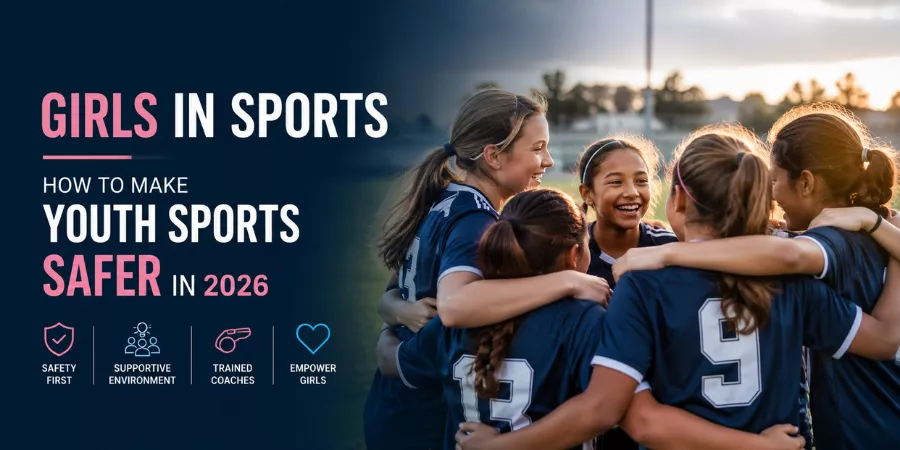
Getting more girls into sports is important, but participation numbers tell only part of the story. A girl may join a football academy, athletics programme or school team and still leave a few months later because of coaching issues, safety concerns, body-confidence problems, family expectations or a lack of support.
That makes retention just as important as recruitment.
A new UNESCO-Nike initiative in India is taking a closer look at this problem. Kickstart Her Future – India is a two-year programme for girls aged 11 to 17 across Delhi NCR. UNESCO says the initiative will study girls’ participation in sport, develop Safe Body Confident Sport (SBCS) resources, train coaches and work toward integrating safeguarding principles into formal coaching frameworks, including Sports Authority of India pathways.
The need for greater participation is clear. The World Health Organization reports that 85% of adolescent girls globally do not meet its recommended level of physical activity, compared with 78% of adolescent boys. WHO recommends an average of at least 60 minutes of moderate-to-vigorous physical activity a day for children and adolescents aged 5 to 17.
The bigger question is how to make sport an environment where girls want to stay.
Why is Girls’ Participation in Sports Important?
Sport provides more than exercise. Regular physical activity during childhood and adolescence supports physical fitness, bone health, cognitive development and mental well-being, according to WHO.
For girls, organised sport can also provide opportunities to develop:
- Teamwork
- Communication
- Leadership
- Goal-setting
- Decision-making
- Confidence
- Social connections
- Discipline
UNESCO has long included girls’ participation and protection within its work on gender equality in sport. Its International Charter states that girls and women should have equal opportunities to participate in physical education, physical activity and sport, including at supervision and decision-making levels.
For that reason, female participation in sports has implications for health, education, social development and equality.
What is the UNESCO-Nike Kickstart Her Future Initiative?
UNESCO introduced Kickstart Her Future – India during a roundtable in New Delhi on August 26, 2026.
The initiative brings together UNESCO and Nike to work on safer and more inclusive sports opportunities for adolescent girls aged 11 to 17 in Delhi NCR. Government officials, sports organisations, civil society groups and corporate foundations participated in the discussion.
The programme has four major areas of work:
| Area | What the initiative plans to do |
| Evidence | Study girls’ participation and understand when and why they leave sport |
| Resources | Develop Safe Body Confident Sport resources |
| Coach training | Build safeguarding and gender-sensitive communication skills |
| Policy | Seek integration of SBCS principles into formal coaching pathways |
UNESCO says the project will also train coaches to safeguard girls against gender-based violence in and through sport.
One important detail is that policy integration is an objective of the initiative at this stage. It should not be described as an already completed change to Sports Authority of India certification.
That distinction is important when reporting on a programme that has just entered its initial phase.
What Prevents Girls from Staying in Sports?
Girls can leave sports for very different reasons. Some barriers are practical. A school timetable may clash with training. A family may struggle with transportation or fees. A sports facility may be too far away.
Other problems are connected to the sporting environment itself.
UNESCO’s latest roundtable drew on findings from the UNESCO-UN Women handbook Tackling Violence Against Women and Girls in Sport. The organisation identified a shortage of trained coaches, body-confidence concerns and inappropriate behaviour by male coaches among factors that can contribute to girls dropping out of sport. That means improving girls’ participation in sports requires more than increasing the number of programmes available. Sports organisations also need to understand what happens after a girl joins.
Other potential barriers include:
- Limited access to suitable facilities
- Lack of trained coaches
- Few female coaches
- Concerns about safety
- Body-image concerns
- Family expectations
- School workload
- Transportation
- Cost
- Limited competitive opportunities
- Gender stereotypes
The important point is that these barriers can overlap.
A girl may enjoy her sport but still stop participating because the overall experience becomes difficult to manage.
Participation is Not the Same as Retention
This is one of the most important issues in the current discussion about girls and sports.
A programme can successfully recruit hundreds of girls. That does not tell us how many remain after six months or a year.
UNESCO’s decision to examine when and why girls leave sport gives retention a central place in the new initiative. Participants at the New Delhi roundtable specifically called for identifying the point at which girls typically drop out of school sport so that earlier intervention becomes possible.
Sports organisations can therefore track more than registrations.
| Measure | What it can show |
| New registrations | How many girls enter sport |
| Attendance | Whether participation remains regular |
| Dropout rate | How many girls leave |
| Age at dropout | When participation declines |
| Reasons for leaving | Specific barriers |
| Athlete feedback | How girls experience the programme |
| Coach representation | Gender balance among coaches |
| Safeguarding data | Safety concerns and organisational response |
This approach gives schools, sports academies and policymakers better information about what is actually happening.
Why is Sports Safety for Girls Important?
A sports programme can have excellent facilities and still provide a poor experience if the people running it are not properly trained.
Young athletes need to know who they can approach when they have a concern. They also need clear boundaries around how coaches communicate and behave.
UNESCO’s work on women and sport identifies protection from harassment, misconduct and abuse as one of its three central areas of intervention.
Its 2024 policy roundtable on violence against women and girls in sport also called for stronger safeguarding and survivor-centred policies, processes and programmes.
For youth sports, this translates into practical measures such as:
- Safeguarding training for coaches
- Clear reporting procedures
- Appropriate coach-athlete boundaries
- Trained staff who know how to respond to concerns
- Regular monitoring
- Safe communication practices
- Accessible channels for parents and athletes
Safety should be part of the sports programme from the beginning rather than added after a problem occurs.
Why Does Coach Training Matter?
Coaches have a direct influence on young athletes.
They lead training sessions, provide feedback and often become one of the main adults a young athlete interacts with in a sporting environment.
At the UNESCO roundtable, participants argued that coach training should be continuous rather than a one-time exercise. They also highlighted mentorship, assessment of Master Trainers, safeguarding, gender-sensitive communication and reporting mechanisms.
That approach is important because safeguarding knowledge needs to be applied in real situations.
A coach working with adolescent girls should understand:
- Appropriate professional boundaries
- How to communicate respectfully
- How to respond to concerns
- How to report safeguarding issues
- How to avoid inappropriate body-related comments
- How to create an inclusive training environment
UNESCO’s programme aims to make these areas part of coach development rather than treating them as separate from sports training.
What is Safe Body Confident Sport?
Safe Body Confident Sport (SBCS) is one of the central elements of Kickstart Her Future – India.
UNESCO says the initiative will create SBCS resources and seek to integrate its principles into formal coaching certification frameworks, including Sports Authority of India pathways.
The focus is particularly relevant to adolescent athletes.
Girls go through significant physical and social changes during adolescence. The way coaches, teammates and other adults discuss bodies, clothing and appearance can affect how comfortable a young athlete feels.
A good sports environment should allow girls to concentrate on learning and participating without inappropriate attention being placed on their bodies.
That is where body-confidence training becomes relevant to sports safety.
How Can Sports Organisations Make Sports Safer for Girls?
There is no single policy that can solve every safeguarding problem. Organisations need several systems working together.
- Train coaches properly: Coaches should understand safeguarding responsibilities, professional boundaries, appropriate communication and reporting procedures.
- Give girls clear reporting options: A young athlete should know exactly who to approach if she feels uncomfortable or experiences inappropriate behaviour.
- Involve parents and schools: UNESCO’s roundtable emphasised that retaining girls in sport requires coordination among parents, teachers, school leaders and local officials, rather than placing responsibility entirely on coaches.
- Track participation and dropout: Organisations should know not only how many girls join but also when they leave and why.
- Increase female representation: More women in coaching and sports leadership can provide additional role models and help address broader gender gaps within sport.
- Review the experience regularly: Girls should have opportunities to provide feedback about coaching, facilities, safety and participation.
These steps create a more complete approach to sports safety for girls.
Why Female Coaches Matter
Representation is another part of the wider conversation about women in sports.
UNESCO has identified persistent gender gaps in sports participation, leadership and decision-making. Its work on women and sport focuses on three areas: increasing girls’ and women’s participation, protecting them from harassment and abuse, and using sport to promote gender equality.
Female coaches can provide young athletes with additional role models and mentors. They can also help increase women’s representation within the sports workforce.
At the same time, representation should not be treated as a substitute for safeguarding. Coaches of every gender need appropriate training, professional standards and accountability.
What Do Sports Leaders Say About the Issue?
The UNESCO roundtable provides useful insight because it brought together people working across government, sports organisations and civil society.
Mogens Kirkeby, President of the International Sport and Culture Association, said the sports sector needs greater attention to grassroots organisations and coaching competencies. He also pointed to the importance of putting qualified people into coaching roles.
Sports Authority of India Secretary Ram Singh connected the issue with India’s growing investment in sport. UNESCO reported that central government funding through Khelo India has grown roughly eight-fold in recent years, alongside increased state-level spending and efforts to develop and engage female coaches through initiatives such as the ASMITA leagues.
These comments show why the issue is larger than one programme. India is investing more in sports infrastructure and participation, while organisations are also looking at the quality and safety of those opportunities.
How Can Schools Increase Girls’ Participation in Sports?
Schools are often where young people first experience organised sport.
A school trying to improve girls and sports participation can start with basic questions:
Useful questions include:
- Which sports do girls want to play?
- At what age does participation begin to decline?
- Are facilities equally accessible?
- Do girls feel comfortable with the coaching staff?
- Are there clear safeguarding procedures?
- Are girls given opportunities to provide feedback?
- Are beginners welcomed alongside experienced athletes?
Schools can then use those findings to improve their programmes.
Not every student wants to become a competitive athlete. School sports should also provide opportunities for students who simply want to stay active and enjoy playing.
How Can Parents Encourage Girls to Play Sports?
Parents can influence whether girls start and continue playing sport.
Support can include helping a child find an activity she enjoys, making training attendance practical and taking concerns seriously.
Parents can also ask sports organisations about:
- Coach qualifications
- Safeguarding policies
- Supervision
- Reporting procedures
- Female staff
- Communication with parents
- Emergency arrangements
These questions give families a better understanding of the environment before enrolling a child.
The Global Physical Activity Gap
The need to encourage physical activity among adolescent girls extends beyond India. One of the strongest aspects of the UNESCO-Nike initiative is its focus on why girls leave sport.
WHO reports that 81% of adolescents aged 11 to 17 globally were insufficiently active, with girls at 85% compared with 78% for boys. The figures come from a WHO-led analysis of data from 1.6 million school-going adolescents across 146 countries between 2001 and 2016.
WHO’s current physical-activity guidance continues to identify the gender gap and notes that social, cultural, environmental and economic factors can influence whether people have safe and enjoyable opportunities to be active.
Girls in Sports: Key Statistics
| Statistic | Figure |
| Adolescent girls not meeting WHO activity guidelines | 85% |
| Adolescent boys not meeting the guidelines | 78% |
| Adolescents aged 11–17 not meeting guidelines overall | 81% |
| Target age for Kickstart Her Future – India | 11–17 |
| Duration of the initiative | 2 years |
| Initial location | Delhi NCR |
| Main programme areas | 4 |
| Khelo India central funding growth cited by UNESCO | Roughly 8× |
WHO’s adolescent activity figures are based on its global analysis, while the Kickstart Her Future programme figures and Khelo India funding reference come from UNESCO’s August 2026 announcement.
What Could Determine the Success of Kickstart Her Future?
The programme is still in its initial phase, so its impact cannot be assessed yet.
Several measures will be worth watching as the programme develops.
- Retention: Do more girls continue participating through adolescence?
- Coach development: Are safeguarding and gender-sensitive practices being used consistently?
- Athlete experience: Do girls report feeling safer and more supported?
- Institutional adoption: Are SBCS principles incorporated into formal coaching systems?
- Evidence: Does the programme produce useful information about why girls leave sport?
- Scalability: Can successful practices be applied outside Delhi NCR?
These measures would provide a more meaningful assessment than participation numbers alone.
Girls in Sports and Gender Equality
UNESCO’s wider sports policy makes the connection between participation and equality clear.
Its International Charter states that girls and women have the right to equal opportunities in physical education, physical activity and sport. It also calls for safe and inclusive opportunities, including protection for children and equal participation at supervision and decision-making levels.
Sport therefore has two roles.
It needs to give girls opportunities to participate, while also ensuring that the systems surrounding participation treat them fairly and protect their rights.
That includes access to facilities, coaching, leadership opportunities and safe environments.
What Experts and Institutions are Saying?
The case for safer youth sports is supported by several major institutions, although they approach the issue from different perspectives.
WHO: Physical activity benefits children and adolescents through improved physical fitness, bone health, cognitive outcomes and mental health. WHO also identifies a substantial global inactivity gap among adolescents, with girls less active than boys.
UNESCO: Girls and women have a right to equal opportunity in physical education, physical activity and sport. UNESCO’s framework also places protection from harassment, misconduct and abuse alongside participation and empowerment.
UNESCO-Nike Kickstart Her Future: The new India programme focuses specifically on adolescent girls, coach training, safeguarding, body confidence, participation data and policy integration.
This combination of health evidence, gender-equality policy and practical safeguarding work gives the issue a broader foundation than a single sports campaign.
Frequently Asked Questions
Why is girls’ participation in sports important?
Girls’ participation in sports supports physical activity and can contribute to physical fitness, cognitive development and mental well-being. Sport can also provide opportunities to develop teamwork, leadership and communication skills.
What are the benefits of sports for girls?
Benefits include physical fitness, social interaction, confidence, teamwork, leadership and opportunities for personal development. WHO also links regular physical activity among children and adolescents with several physical and mental health benefits.
What is the UNESCO-Nike girls’ sports initiative?
Kickstart Her Future – India is a two-year UNESCO-Nike programme for girls aged 11 to 17 across Delhi NCR. It focuses on participation research, Safe Body Confident Sport resources, coach training and potential integration of safeguarding principles into formal coaching pathways.
Why do girls leave sports?
Factors can include limited access to facilities, lack of trained coaches, body-confidence concerns, inappropriate behaviour, family expectations, school commitments and other practical barriers. UNESCO’s latest programme specifically aims to understand when and why girls leave sport.
How can sports organisations make sports safer for girls?
They can provide continuous safeguarding training, establish clear reporting procedures, maintain professional coach-athlete boundaries, collect feedback from athletes and involve parents and schools in safeguarding efforts.
What is Safe Body Confident Sport?
Safe Body Confident Sport, or SBCS, is a central component of the UNESCO-Nike initiative. The programme plans to develop SBCS resources and seek to integrate its principles into formal coaching certification frameworks.
How can schools increase girls’ participation in sports?
Schools can offer a wider range of activities, provide equal access to facilities, train staff in safeguarding, ask girls about barriers to participation and track both participation and dropout.
What role do female coaches play in girls’ sports?
Female coaches can provide representation, mentorship and additional role models for young athletes. Increasing women’s representation in coaching also supports broader efforts toward gender equality in sport.
Key Takeaways
- Girls need safe and supportive sports environments, not just access to sports programmes.
- WHO reports that 85% of adolescent girls globally do not meet recommended physical activity levels, compared with 78% of boys.
- UNESCO and Nike’s Kickstart Her Future – India programme targets girls aged 11 to 17 across Delhi NCR.
- The programme will study participation and dropout, develop SBCS resources and train coaches.
- UNESCO says coach training should include safeguarding, gender-sensitive communication and reporting mechanisms.
- Retention is an important measure because registration numbers alone cannot show whether girls remain involved.
- Schools, parents, coaches, sports organisations and policymakers all have roles in creating safer youth sports.
- The initiative is still in its initial phase, so its eventual impact cannot yet be measured.
- Its longer-term value will depend on whether its findings and practices can be adopted more widely.
Research Note
This article uses information from UNESCO, the World Health Organization and UNESCO’s published material on women and girls in sport. Programme details are based primarily on UNESCO’s announcement of the Kickstart Her Future – India initiative published following the August 26, 2026 roundtable. WHO statistics are attributed to WHO’s physical-activity research and guidance.
Where the article provides analysis or recommendations, those points are presented as editorial interpretation rather than as findings attributed to UNESCO or WHO.
Conclusion
The discussion around girls in sports is often reduced to participation numbers. Those numbers matter, but they do not explain why a girl stays, why she leaves or whether she feels safe while taking part.
That is where the UNESCO-Nike initiative takes a useful approach.
Kickstart Her Future is looking at participation alongside coaching, safeguarding, body confidence and policy. It is also asking a practical question: when girls leave sport, what caused them to leave?
The programme has only entered its initial phase, so there is no evidence yet to judge its long-term results. Its progress should be measured through retention, athlete experience, coach development and the adoption of effective safeguarding practices.
The broader need is already clear. WHO’s data shows a substantial physical-activity gap among adolescents, with girls less active than boys globally.
Giving girls more opportunities to participate is an important first step. Making those opportunities safe, respectful and sustainable is what can help them remain part of sport.