
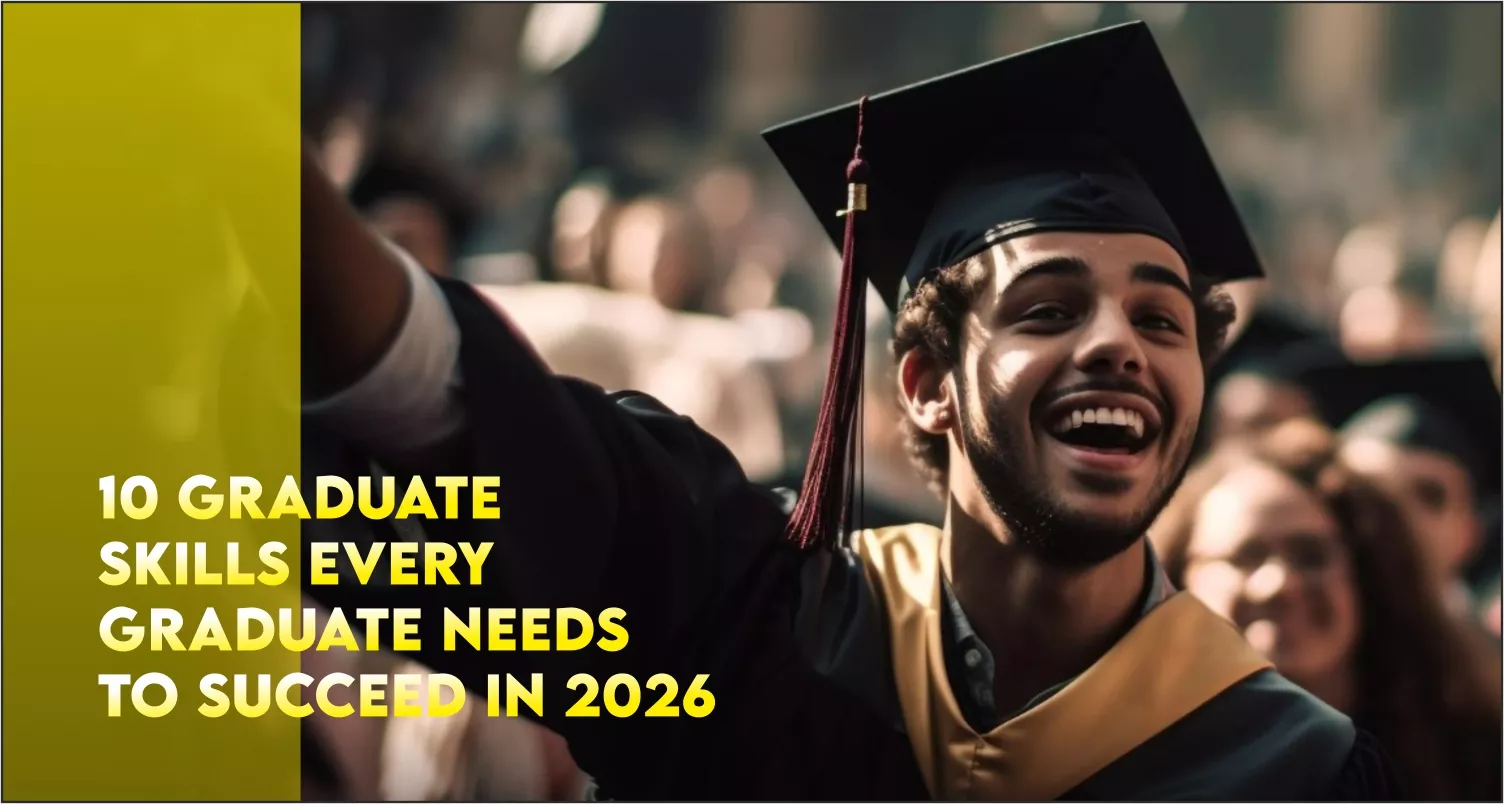
Getting a degree is the starting point. What happens after that depends almost entirely on what you can actually do.
Employers are projecting just a 1.6% increase in hiring for the Class of 2026, according to NACE’s Job Outlook 2026 survey, a cautious number that reflects a competitive market where having a degree is no longer enough on its own. 70% of employers now use skills-based hiring, up from 65% last year. They are not just looking at where you studied. They are looking at what you can demonstrate.
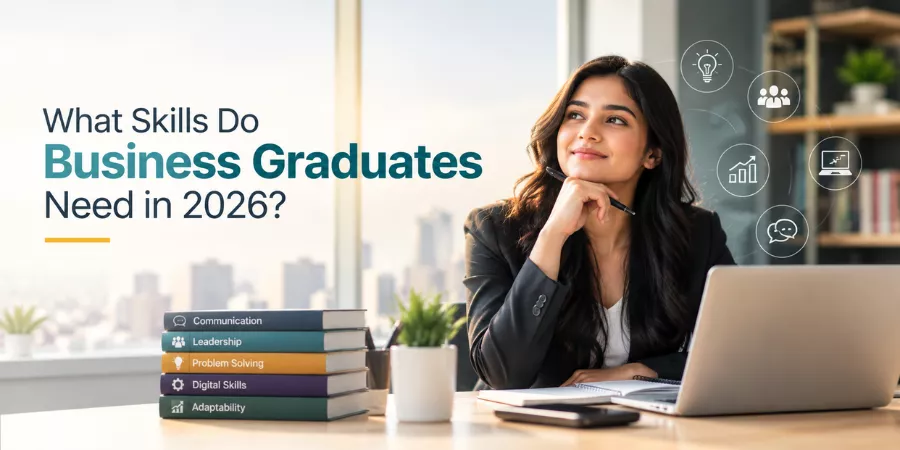
The graduate skills that matter most in 2026 are a mix of human and technical, and the gap between graduates who have them and those who do not is widening fast.
What Graduate Skills Do Employers Want in 2026?
Employers see communication, teamwork, professionalism, and critical thinking as the most important career readiness skills for new graduates, according to NACE’s Job Outlook 2026 Spring Update.
But the list goes further than that. Below are the 10 graduate skills that appear consistently across credible research, and why each one carries real weight with hiring managers right now.
1. Communication
This tops almost every employer survey, and for good reason. When reviewing resumes of Class of 2026 candidates, employers seek evidence of polished communication skills alongside teamwork and problem-solving, according to NACE.
Communicating effectively goes beyond speaking well, you need also to communicate clearly via writing, be a good listener and, in addition, be able to change your communication style as the audience, and confidently present your ideas.
Communication is one of the most valuable skills that the employer is always looking for, in particular for graduates since it is one of the major factors that contribute to a good performance and a peaceful working environment.
2. Critical Thinking and Problem-Solving
The World Economic Forum’s Future of Jobs Report 2025 names analytical thinking the top core skill, essential for around seven in ten employers.
Employers want graduates who can look at a messy situation and work through it methodically, not ones who need a step-by-step template for every challenge. Problem-solving is the employability skill that separates graduates who add value from day one from those who take months to settle in.
3. Teamwork and Collaboration
Most employers give new graduates high marks for teamwork, it is one area where the Class of 2026 scores well, according to NACE’s Spring Update.
That is encouraging, but it also raises the bar. Because most graduates can point to group projects and team sports, the ones who stand out are those who can explain specifically what they contributed, how they navigated disagreement, and what the outcome was. Evidence matters more than claims.
4. AI Literacy
This is the skill that has shifted fastest in the last 12 months. Employers increasingly report that AI skills are important for recent college graduates, yet there is growing evidence of Gen Z resistance to AI, creating a striking disconnect between what employers want and what students are prepared to offer.
LinkedIn ranks AI and big data as the fastest-growing skill toward 2030. Graduates do not need to be engineers. They need to understand how AI tools work, where they are useful, and where human judgment still has the edge. That working knowledge is already a differentiator.
5. Adaptability and Resilience
Resilience and adaptability are now the most significant differentiators between growing and declining job roles, according to the WEF’s skills analysis. Graduates who can respond constructively to failure, ambiguity, and pressure are disproportionately more likely to succeed in fast-moving environments.
The graduate who handles an unexpected setback well is worth more to a team than one who performs well only when conditions are stable. Every employer knows this. Not enough graduates demonstrate it.
6. Emotional Intelligence
Emotional intelligence is emerging as a decisive hiring factor at all levels. Research published in HR Dive (2026) noted that employers consistently seek graduates who can communicate clearly, adapt to change, collaborate effectively, and navigate complex interpersonal dynamics.
EQ forms how a person receives feedback, manages pressure, resolves conflict, and builds working relationships. None of that shows up on a transcript. It shows up in how you behave in a room, and experienced hiring managers read it quickly.
7. Digital and Data Literacy
Being comfortable with technology is table stakes. What employers now expect is something more specific: the ability to read data, draw basic conclusions from it, and communicate what those conclusions mean.
The WEF estimates that 59% of the global workforce will need some form of reskilling by 2030, and a significant portion of that reskilling centres on digital fluency. Graduates who already have a grounding in data tools, even at a basic level, start ahead.
8. Networking and Relationship Building
The share of rising graduates who view networking as “very important” spiked almost nine percentage points year-over-year, rising from 55.3% in 2025 to 64.1% in 2026, according to ZipRecruiter’s Graduate Survey 2026.
That shift determines something graduates are learning, sometimes the hard way: jobs come through people as often as they come through applications. Building a professional network before you need it is one of the most practical employability skills a graduate can develop, and it compounds over time.
9. Professionalism and Work Ethic
According to NACE’s Job Outlook 2025, professionalism and work ethic remain among the most consistently prioritised attributes across employer surveys.
This sounds obvious, but it covers a lot of practical ground: showing up prepared, meeting deadlines, following through on commitments, and behaving with integrity when no one is watching. Employers have become more explicit about screening for these qualities because remote and hybrid work has made them harder to observe during an interview.
10. Commercial Awareness
This one is underrepresented in university curriculums and overrepresented on job descriptions.
Commercial awareness means understanding how businesses make money, what pressures the industry you are entering faces, and how your role fits into the wider organisation. Graduates who walk into interviews able to discuss the company’s competitive position or recent strategic decisions stand out immediately from those who have only read the “About Us” page.
It is a graduate skill that takes deliberate effort to build, reading industry news, following earnings calls, talking to people who work in the sector, but the payoff in interviews is disproportionate.
How Do These Graduate Skills Connect to Employability Skills?
Employability skills are the broader set of capabilities that make someone hirable and effective across roles and industries. Graduate skills are a subset, the specific version of those capabilities that employers expect from someone entering the workforce for the first time.
LinkedIn’s 2025 research stresses that soft skills like communication and adaptability remain crucial differentiators that make graduates uniquely valuable precisely because AI is increasingly handling structured, repeatable tasks. The employability skills that hold their value are the ones that are hardest to automate.
Which Graduate Skills are Hardest to Build After Graduation?
The honest answer is that the hardest ones to build are the ones that require years of real-world context: commercial awareness, emotional intelligence, and adaptability. These do not develop in classrooms or on a CV. They develop through experience, internships, part-time work, side projects, voluntary roles.
Employers responding to NACE’s Job Outlook 2026 survey specifically emphasised that students should share examples and situations where they used their skills to solve real problems, not just list the skills themselves. That evidence can only come from experience.
32.9% of recent graduates with apprenticeship experience report already being on their dream career path, with none reporting being in roles misaligned with where they want to end up, according to ZipRecruiter’s Graduate Survey 2026. Structured experience, before and after graduation, is the fastest route to the skills that actually matter.