

Table of Contents
- Research That Challenged Market-Based Education Reform
- Teacher Quality: The Most Important School Factor
- From Researcher to Obama Administration Advisor
- The Learning Policy Institute: Bridging Research and Practice
- Equity Through Access to Quality Teaching
- Frequently Asked Questions
- Building Systems That Support Teaching Excellence
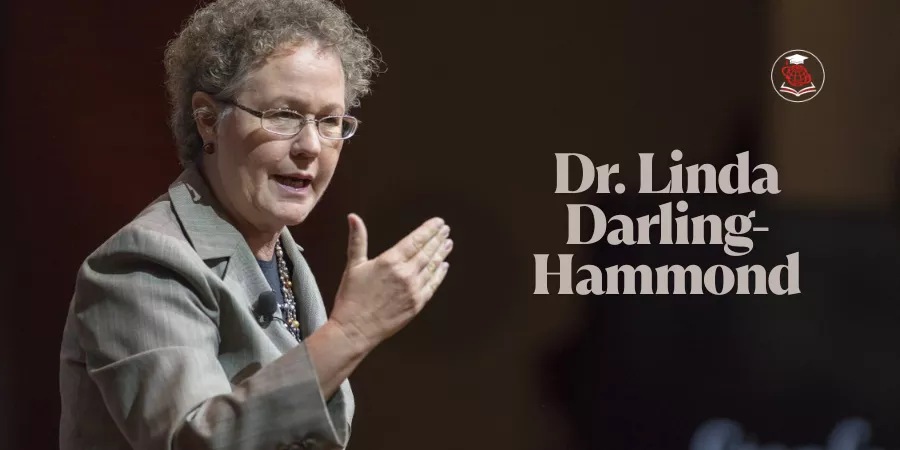
Dr. Linda Darling-Hammond stands as perhaps the most influential education researcher of the past three decades, fundamentally shaping how policymakers, practitioners, and the public understand teacher quality, educational equity, and evidence-based reform. Her research demonstrated that teacher effectiveness matters more for student achievement than any other school factor and that teacher preparation, professional development, and working conditions significantly influence teaching quality. These findings challenged market-based reform approaches emphasizing testing and accountability while providing evidence for investments in teacher capacity building.
| Research Impact:
Darling-Hammond’s work has been cited over 100,000 times in academic literature, influenced education policy in dozens of states, and shaped federal initiatives including Race to the Top and Every Student Succeeds Act, making her among the most consequential education researchers globally. |
Research That Challenged Market-Based Education Reform
Darling-Hammond’s research career, spanning over four decades, consistently provided evidence contradicting assumptions underlying market-based education reform. While reformers argued that teacher quality could be improved through accountability systems identifying and removing ineffective teachers, her research demonstrated that teacher preparation quality and ongoing professional support mattered far more than evaluation-based dismissals for building effective teaching forces.
Her studies showed that teachers from high-quality preparation programs entering with strong content knowledge and extensive clinical training consistently outperformed teachers with alternative certifications or minimal preparation, regardless of evaluation systems. This evidence challenged Teach For America’s expansion and alternative certification routes that reformers promoted, arguing instead for strengthening traditional preparation programs rather than bypassing them through shortcuts presuming that smart people could teach effectively without substantial pedagogical training.
- Teacher quality: Most important school-level factor for achievement
- Preparation matters: High-quality programs produce more effective teachers
- Working conditions: Support systems affect teacher effectiveness and retention
- Equity implications: Disadvantaged students disproportionately assigned weak teachers
- International comparison: High-performing nations invest in teacher capacity
Teacher Quality: The Most Important School Factor
Darling-Hammond’s research quantified teacher quality effects on student learning, demonstrating that students assigned to highly effective teachers for multiple consecutive years gain substantially more than peers assigned to less effective teachers, with effects persisting years later. Her work showed that teacher quality variation within schools often exceeds variation between schools, suggesting that ensuring all students access to strong teaching matters more than school choice or competition.
This research had profound policy implications. If teacher quality matters most, then investments should prioritize teacher recruitment, preparation, mentoring, professional development, and working conditions rather than primarily testing students and evaluating teachers through test-based accountability. Her evidence that equitable distribution of qualified teachers could dramatically reduce achievement gaps challenged arguments that urban school failure reflected primarily student poverty or family dysfunction rather than systemic inequities in access to effective teaching.
| Teacher Effect Research:
Students assigned to highly effective teachers three years consecutively scored 50 percentile points higher than peers assigned to ineffective teachers over the same period, demonstrating cumulative effects of teacher quality far exceeding other interventions. |
What Makes Teachers Effective
Darling-Hammond’s research identified specific characteristics of effective teachers including strong content knowledge in subjects taught, understanding of how students learn subject matter, ability to assess student thinking and adapt instruction accordingly, skills in managing classroom environments conducive to learning, and commitment to all students’ success regardless of background. These capabilities develop through comprehensive preparation and ongoing professional learning rather than innate talent alone.
From Researcher to Obama Administration Advisor
Linda Darling-Hammond served as education advisor to Barack Obama’s 2008 presidential campaign and led his transition team on education policy. Her influence helped shape the administration’s education priorities including increased teacher preparation funding, support for professional development, and emphasis on comprehensive evaluation systems rather than purely test-based accountability. However, the administration’s eventual embrace of Race to the Top policies emphasizing charter schools, test-based teacher evaluation, and competitive grants frustrated Darling-Hammond and aligned more closely with market-based reform than her research recommended.
This tension illustrated challenges facing research-based policy advocates when political realities and competing interest groups shape decisions. Despite her advisory role, the Obama administration appointed reformers supporting test-based accountability to key positions while Darling-Hammond returned to Stanford. Her experience demonstrated that research evidence alone cannot determine policy when powerful constituencies including foundations, business groups, and reform organizations promote alternative approaches backed by substantial resources and political access.
- 2008: Education advisor to Obama presidential campaign
- 2008-2009: Led Obama transition team on education
- Influenced: Federal teacher preparation and professional development funding
- Tensions: With Race to the Top test-based evaluation requirements
- Returned: To Stanford to continue research and advocacy
The Learning Policy Institute: Bridging Research and Practice
In 2015, Darling-Hammond founded the Learning Policy Institute, an independent research organization translating education research into policy recommendations and practitioner guidance. LPI conducts original research, synthesizes existing evidence, and works directly with states and districts implementing evidence-based reforms. The organization represents Darling-Hammond’s strategy for increasing research influence through accessible communication and direct policy engagement rather than relying on academic publications alone.
LPI’s work addresses teacher preparation and development, early childhood education, school accountability and assessment, educational equity, and other areas where Darling-Hammond’s career research concentrated. The organization provides technical assistance helping states and districts implement research-based practices, demonstrating that effective policy translation requires not just producing evidence but supporting implementation through ongoing consultation and capacity building.
Educators seeking to understand evidence-based teacher preparation and development models can access LPI’s extensive research briefs, policy recommendations, and implementation guides translating academic research into actionable strategies for improving teaching quality at scale.
- Founded 2015: Independent education research and policy organization
- Mission: Translating research into policy and practice
- Focus areas: Teacher quality, equity, assessment, early childhood
- Activities: Original research, evidence synthesis, policy consultation
- Impact: Direct work with states and districts implementing reforms
Equity Through Access to Quality Teaching
Central to Darling-Hammond’s work is demonstrating that educational equity requires equitable access to well-prepared, experienced teachers. Her research documents that disadvantaged students in high-poverty schools and communities of color disproportionately receive teachers with less preparation, less experience, and lower qualifications than affluent students receive. This inequitable distribution of teaching quality perpetuates achievement gaps that accountability systems alone cannot close.
Her equity agenda emphasizes system-level investments ensuring that all schools, particularly those serving disadvantaged communities, can recruit, develop, and retain strong teachers through competitive compensation, comprehensive induction support, manageable working conditions, and collaborative professional cultures. This contrasts with reform approaches assuming that market competition and accountability pressure can improve struggling schools without addressing fundamental resource inequities that make teaching in disadvantaged schools more difficult and less attractive than teaching in affluent communities.
| Equity Evidence:
Research documenting that students in high-poverty schools have one-in-four chance of being assigned highly qualified teachers compared to two-in-three chance for students in low-poverty schools, demonstrating systematic inequity in access to quality teaching. |
- Inequitable distribution: Disadvantaged students assigned weaker teachers
- Experience gaps: High-poverty schools lose teachers to affluent schools
- Preparation disparities: Emergency-certified teachers concentrated in poor schools
- Working conditions: Inadequate support systems in disadvantaged schools
- Systemic solutions: Require addressing resource inequities, not just accountability
Frequently Asked Questions
What is Dr. Linda Darling-Hammond known for?
Dr. Linda Darling-Hammond is known for research demonstrating that teacher quality is the most important school factor affecting student achievement and that high-quality teacher preparation and professional development produce more effective teaching than alternative routes or test-based accountability alone. Her work has influenced education policy nationally and internationally, emphasizing equity through access to well-prepared teachers rather than market-based competition and testing.
How does Darling-Hammond’s research differ from education reform approaches?
Darling-Hammond’s research emphasizes building teacher capacity through comprehensive preparation, ongoing professional development, and supportive working conditions, contrasting with market-based reforms emphasizing testing, accountability, and competition. She argues that improving teaching requires investment in teacher knowledge and skills rather than primarily identifying and removing ineffective teachers through evaluation systems, and that equity requires addressing resource disparities rather than assuming accountability pressure alone can improve struggling schools.
What is the Learning Policy Institute?
The Learning Policy Institute is an independent research organization founded by Darling-Hammond in 2015 that translates education research into policy recommendations and practical guidance. LPI conducts original research, synthesizes evidence, and provides technical assistance to states and districts implementing evidence-based reforms in areas including teacher quality, equity, assessment, and early childhood education. It represents a strategy for increasing research influence through accessible communication and direct policy engagement.
What does research say about teacher preparation quality?
Research shows that teachers from high-quality preparation programs with strong content courses, extensive clinical training, and integration of theory and practice consistently outperform teachers from weaker programs or alternative routes with minimal preparation. Effective programs feature selective admissions, coherent curricula linking coursework to practice, extended clinical experiences with expert mentoring, and assessment ensuring candidates demonstrate teaching competence before receiving licenses. These features cost more than shortcuts but produce teachers who remain in teaching longer and achieve better results.
How can schools ensure equitable access to quality teachers?
Ensuring equitable access requires competitive compensation attracting talented candidates to teaching, comprehensive induction support retaining new teachers, manageable class sizes and workloads enabling effective instruction, collaborative professional cultures supporting continuous improvement, and career advancement opportunities rewarding excellence without requiring teachers to leave classrooms. Disadvantaged schools need additional resources and support making teaching there as attractive and sustainable as teaching in affluent communities, requiring system-level investment rather than assuming individual school accountability can overcome resource disparities.
Building Systems That Support Teaching Excellence
Dr. Linda Darling-Hammond’s career demonstrates that improving education requires understanding teaching as complex professional work requiring substantial preparation, ongoing learning, and supportive working conditions rather than assuming that smart people can teach effectively without training or that accountability pressure alone will improve quality. Her research provides evidence contradicting assumptions underlying much education reform over recent decades, showing that shortcuts and market mechanisms cannot substitute for systematic investment in teacher capacity.
The challenge moving forward involves translating her evidence into sustained policy and practice change against political and economic forces promoting quicker, cheaper approaches. While her research influences educators, researchers, and many policymakers, powerful constituencies continue promoting market-based reforms despite limited evidence of effectiveness. Her work through the Learning Policy Institute represents an ongoing effort to bridge research and practice, demonstrating that evidence-based reform requires not just producing research but actively engaging in policy translation, supporting implementation, and building political coalitions advocating for investments that research shows matter most for children’s learning and for building teaching profession that can sustain quality across all schools and communities.