
Table of Contents
- The Traditional Coaching Industry and Its Barriers
- YouTube and the Democratization of Knowledge
- Beyond Khan Sir: The Broader Free Education Ecosystem
- Economic and Social Impact on Students
- Challenges Facing Free Education Sustainability
- Frequently Asked Questions
- The Future of Accessible Education
India’s free education movement, exemplified by Khan Sir’s revolutionary free education model but extending far beyond any single educator, represents fundamental disruption of traditional coaching industry that has long profited from information scarcity and geographic concentration. Digital platforms enable individual educators and small organizations to reach millions of students with quality content at negligible marginal cost, challenging business models built on expensive physical infrastructure, limited class sizes, and premium pricing justified by artificial scarcity rather than educational value.
| Movement Scale:
Over 50 major educational YouTube channels in India collectively reach 100+ million subscribers, delivering free content across competitive exams, K-12 subjects, skill development, and higher education, representing the world’s largest free education ecosystem. |
The Traditional Coaching Industry and Its Barriers
India’s coaching industry grew into multi-billion dollar sector serving students preparing for competitive examinations, engineering and medical entrance tests, and K-12 board exams. Premium coaching institutes in Delhi, Kota, Mumbai, and other education hubs charge 100,000 to 500,000 rupees annually for classroom instruction, creating massive barriers for students from economically disadvantaged backgrounds despite having talent and motivation to succeed.
Geographic concentration required students from smaller cities and rural areas to relocate to coaching hubs, incurring accommodation, food, and living expenses adding 100,000 to 300,000 rupees annually beyond coaching fees. The total cost of serious exam preparation could exceed 800,000 rupees over two years, representing multiple years of average Indian household income and creating insurmountable financial barriers for most families despite children’s academic potential.
- Coaching fees: 100,000-500,000 rupees annually for premium institutes
- Living expenses: 100,000-300,000 rupees annually in coaching hubs
- Total costs: 800,000+ rupees over typical two-year preparation period
- Economic barrier: Equivalent to 3-5 years of median household income
- Geographic concentration: Quality coaching limited to major urban centers
YouTube and the Democratization of Knowledge
YouTube’s arrival in India created platform enabling individual educators to reach mass audiences without requiring institutional infrastructure, venture capital, or expensive marketing. Educators with teaching talent and subject expertise could upload lectures accessible to anyone with internet connection, eliminating geographic barriers and reducing education costs from hundreds of thousands of rupees to essentially zero beyond internet access and device costs.
The democratization extends beyond economics to pedagogical diversity. Traditional coaching institutes employ standardized teaching methods that work well for some students but poorly for others. YouTube’s variety allows students to find educators whose teaching styles, pacing, and explanatory approaches match their individual learning needs. A student struggling with one teacher’s explanation can search alternative presentations until finding approach that clarifies difficult concepts, personalizing education in ways that uniform classroom instruction cannot provide.
| Platform Economics:
YouTube’s marginal cost structure allows educators to serve 1 million students as easily as 100 students once content is created, fundamentally different from classroom coaching limited by physical space and requiring proportional cost increases to reach more students. |
- Zero marginal cost: Serving additional students costs nothing once content created
- Geographic reach: Internet access eliminates location barriers
- Pedagogical diversity: Students choose teaching styles matching preferences
- Accessibility: Content available 24/7 for review and re-watching
- Multilingual: Educators teaching in Hindi, Tamil, Telugu, and regional languages
Beyond Khan Sir: The Broader Free Education Ecosystem
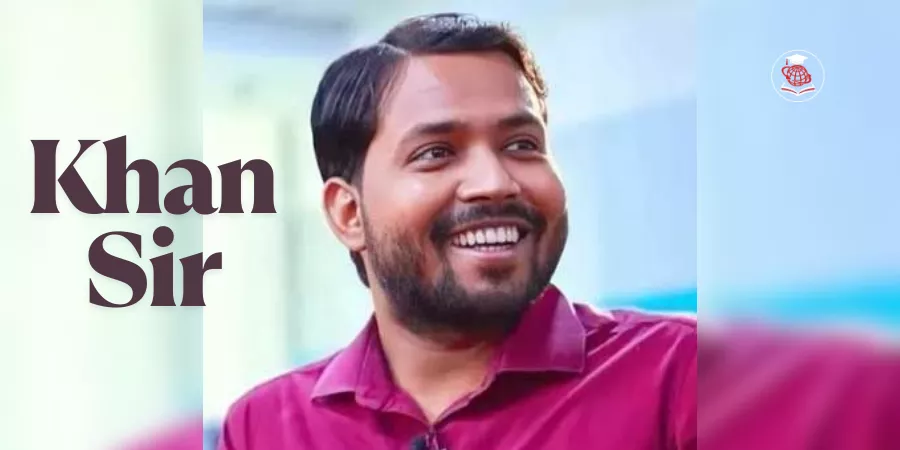
Khan Sir represents one prominent example within broader ecosystem of free education creators addressing diverse learning needs. Unacademy Educators including Roman Saini, Awadh Ojha, and others built massive followings teaching UPSC preparation. Physics Wallah (Alakh Pandey) provides free IIT-JEE and NEET preparation reaching over 10 million students. Dozens of channels address SSC, banking, railway exams, state government jobs, and other competitive tests.
The ecosystem extends beyond competitive exams to K-12 education, with channels teaching mathematics, science, social studies, and languages aligned to CBSE, ICSE, and state board curricula. Skill development content addresses programming, digital marketing, graphic design, and other employability skills. This comprehensive coverage means that students can access free, quality education from primary school through competitive exam preparation and skill development without ever paying traditional educational institutions.
- Competitive exams: UPSC, IIT-JEE, NEET, SSC, banking, railways
- K-12 education: CBSE, ICSE, state board curriculum coverage
- Skill development: Programming, digital marketing, design, languages
- Higher education: University-level courses in various disciplines
- Vernacular content: Teaching in Hindi, Tamil, Telugu, and regional languages
Economic and Social Impact on Students
The free education movement’s economic impact proves substantial for families who previously could not afford quality coaching. Students report saving 200,000 to 800,000 rupees through free online preparation compared to traditional coaching costs. These savings allow families to avoid debt, preserve resources for other children’s education, or invest in necessities previously sacrificed to afford coaching fees.
Beyond economics, the movement creates social mobility pathways for students from marginalized communities historically excluded from premium education. First-generation learners from rural areas, scheduled castes and tribes, religious minorities, and economically disadvantaged backgrounds now access teaching quality previously available only to urban elite. Success stories of students from remote villages clearing competitive exams after preparing entirely through free online content demonstrate that talent and determination, not family wealth or social connections, can determine educational and career outcomes.
| Equity Impact:
Student testimonials reveal that over 60% of free education platform users come from families earning less than 300,000 rupees annually, demographics rarely able to afford traditional coaching, demonstrating genuine expansion of access rather than merely substituting free for paid among affluent students. |
- Cost savings: 200,000-800,000 rupees saved per student
- Debt avoidance: Families not borrowing for education expenses
- First-generation access: Rural and marginalized students reaching quality content
- Social mobility: Talent competing regardless of economic background
- Reduced migration: Students studying from home avoiding relocation costs
Challenges Facing Free Education Sustainability
While free education movement expanded access dramatically, sustainability challenges remain. Individual educators providing completely free content without monetization cannot sustain efforts indefinitely without income sources. Many educators eventually introduce paid courses, test series, or premium content, raising questions about whether free education remains genuinely accessible or becomes marketing funnel for paid services.
YouTube’s advertising revenue provides partial sustainability, with successful education channels earning income through ads displayed on videos. However, ad revenue varies unpredictably and may not provide stable income supporting full-time content creation. Some educators accept sponsorships or donations, but these revenue sources also prove inconsistent. The challenge involves finding business models sustaining high-quality free content production without either introducing paywalls excluding economically disadvantaged students or requiring educators to sacrifice financial security for educational mission.
- Ad revenue: Inconsistent income from YouTube advertisements
- Freemium models: Free basic content with paid premium materials
- Donations: Voluntary student contributions supporting educators
- Offline centers: Physical coaching providing income while maintaining free online content
- Sponsorships: Company funding in exchange for product mentions
Frequently Asked Questions
How does free education quality compare to paid coaching?
Student testimonials and success rates suggest that top free education content matches or exceeds many paid coaching institutes in teaching quality. The best free educators often have more teaching experience, better communication skills, and deeper subject expertise than average paid coaching teachers. However, paid coaching offers classroom structure, peer interaction, doubt-clearing sessions, and accountability mechanisms that benefit some students, even when content quality itself is comparable to free alternatives.
Can students completely prepare for competitive exams using only free content?
Yes, thousands of students have cleared UPSC, IIT-JEE, NEET, SSC, and other competitive exams preparing entirely through free online content without attending paid coaching. Success requires discipline, structured study plans, and effective use of multiple free resources, but comprehensive free content now exists covering all examination syllabi. Students who thrive with self-directed learning can absolutely prepare completely through free platforms.
Why do coaching institutes still attract students despite free alternatives?
Coaching institutes provide classroom environment, peer competition, structured schedules, regular tests, doubt-clearing sessions, and accountability that self-directed online learning lacks. Some students need external structure and cannot maintain discipline studying independently. Others value peer interaction and competitive environment motivating consistent effort. Premium institutes also offer personalized mentoring, interview preparation, and comprehensive test series that free platforms may not provide, justifying costs for students preferring full-service preparation experience.
What role does internet access play in free education effectiveness?
Internet access remains critical barrier limiting free education reach. While urban and semi-urban India has widespread internet availability, rural areas often lack reliable connectivity or affordable data plans. Government initiatives expanding internet access and reducing data costs help, but millions of students still cannot access online content consistently. Free education’s equity benefits concentrate among students with internet access, potentially widening gaps between connected and unconnected populations even while reducing gaps within internet-accessible demographics.
The Future of Accessible Education
India’s free education movement demonstrates that digital platforms can fundamentally transform educational access when talented educators commit to serving students regardless of ability to pay. The movement challenges assumptions that quality education requires expensive infrastructure, credentialing, and institutional gatekeeping, showing instead that knowledgeable, dedicated teachers leveraging technology can reach millions at marginal cost approaching zero.
The sustainability challenge requires developing business models supporting educators financially while maintaining genuine accessibility for economically disadvantaged students. Hybrid approaches combining free online content with affordable offline services, freemium models offering basic content freely with optional premium features, and public funding supporting free education creators all represent potential paths forward. What seems clear is that having demonstrated that mass-scale free quality education is technically and pedagogically feasible, India’s education system cannot return to previous models where economic barriers excluded talented students from accessing knowledge and preparation necessary for educational and career advancement. The free education movement expanded not just economic access but social imagination about who deserves quality education and whose talent and determination should determine success rather than family wealth and social connections that previously structured educational opportunity and social mobility in Indian society.