

Where Technology Helps, and Where It Cannot!
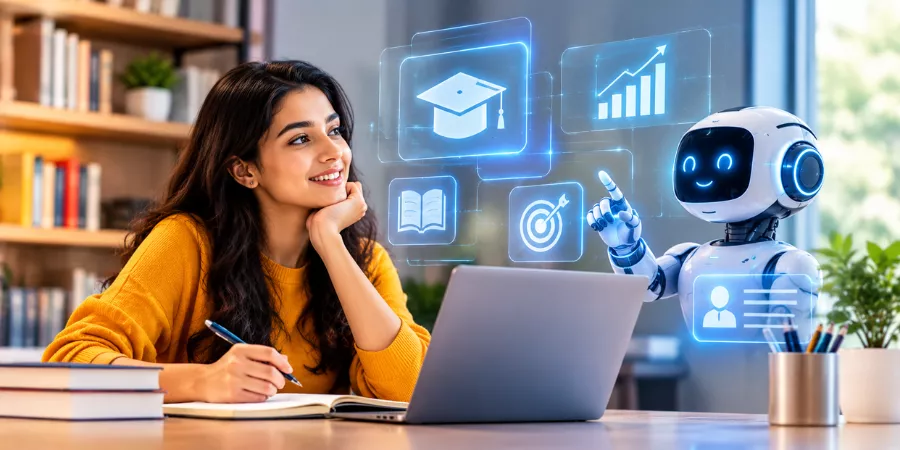
Technology can fix some of what education has overlooked, but not all of it. It can give struggling children more personal practice, ease the workload on teachers and reach learners that schools struggle to serve. It cannot replace good teaching, fix poverty or close a gap that begins with having no device, no electricity or no trained teacher. The best results appear when technology supports teachers rather than standing in for them.
Every education system has people it serves badly. The child who falls behind in the early grades and never catches up. The student in a crowded class who needs ten minutes of attention and gets one. The learner in a remote village, miles from a good school. For decades these problems were treated as unfortunate but unavoidable. Technology is now offering a different answer, and the question is how far it can really go.
What Has Education Overlooked?
The clearest example is the quiet failure to teach basic reading. According to the World Bank, UNESCO, UNICEF and partners, an estimated 70% of 10-year-olds in low- and middle-income countries could not read and understand a simple text by 2022, up from 57% before the pandemic. In Africa the figure was 87%. A child who cannot read by 10 finds almost every later subject harder, and many are never given a second chance.
Other overlooked needs are easier to recognise than to measure: pupils who learn at a different pace from the class, students who speak a different language at home, learners with disabilities, and adults who left school early. Large classes and limited resources mean these needs often go unmet, not because teachers do not care, but because one person cannot personalise lessons for forty children.
What Does the Evidence Say About Technology Helping?
The most striking recent result comes from Nigeria. In Edo State, World Bank researchers ran a randomised trial in which secondary school students joined a six-week after-school English programme using a generative AI tutor, with teachers guiding the sessions.
The students made large gains, with effect sizes of about 0.3 standard deviations, and the programme outperformed roughly 80% of other interventions in a database of trials from developing countries. One summary of the working paper equated the gains to about one and a half to two years of typical schooling.
Notice the conditions. The AI was not left alone with the students. Pupils worked in pairs under teacher supervision, using prompts designed to encourage reasoning, and the researchers stressed that benefits came when AI was embedded in a structured routine with clear teaching goals. The more sessions a student attended, the more they gained.
Researchers found that generative AI used without guardrails can harm learning in high school mathematics. Together, these findings point to the same lesson: the tool matters less than how it is used.
Where Can Technology Genuinely Help?
Several areas look promising.
- Personalised practice. Software can adjust the difficulty of questions to each pupil, give instant feedback and let children repeat a skill until it sticks, which a busy teacher cannot do for every child at once.
- Teacher support. Tools that draft lesson materials, mark routine work and track progress can return time to teachers for the human parts of the job: explaining, encouraging and noticing who is struggling.
- Reaching remote learners. Radio, television, mobile phones and offline learning apps have carried lessons to places where schools are scarce, often at low cost.
- Language and accessibility. Translation, text-to-speech and speech recognition can help children learn in a language they understand and support students with visual, hearing or reading difficulties.
- Better data. Simple assessments can show quickly which children are falling behind, so help arrives early rather than after failure.
Where Does Technology Fall Short?
Technology cannot help a child who has no access to it. The International Telecommunication Union reports that 94% of people in high-income countries use the internet, compared with only 23% in low-income countries, and 2.2 billion people remain offline. Devices, electricity, data costs and digital skills are all part of the picture.
Even good programmes can favour those already ahead. The Nigerian study found stronger gains among higher-performing students, girls and students from better-off households. Attendance was also affected by real-life problems such as seasonal flooding, teacher strikes and students needing to work after school. Technology works inside these realities, not above them.
There is a wider risk too. A school that buys devices but neglects teacher training, curriculum and classroom support may see little benefit. Screens do not teach by themselves, and children also need attention, encouragement and human relationships to learn well.
How Should Schools and Governments Use Technology Wisely?
A sensible approach has a few parts.
- Start with the learning problem. Decide whether the need is early reading, maths, teacher workload or access, then choose a tool for that purpose.
- Keep teachers at the centre. Train them, involve them in design and treat technology as support rather than replacement.
- Test and measure. Pilot on a small scale, compare results with a control group where possible and expand only what works.
- Plan for the offline majority. Use low-tech options such as radio, printed material and offline apps alongside digital ones.
- Protect children. Set clear rules on privacy, data use, screen time and the safe use of AI.
- Watch for inequality. Check who is benefiting and who is not, and target extra support at those left out.
Conclusion
Technology can repair some of what education has overlooked, particularly personal attention, early reading practice and access for those far from good schools. The best evidence shows real promise when tools are carefully designed and guided by teachers. But it is a means, not a cure. The deeper work remains human: training teachers, supporting families, funding schools fairly and making sure every child, including those furthest from a screen, has a chance to learn.