
Table of Contents
- The Hole in the Wall Experiment That Changed Everything
- What Children Taught Themselves Without Teachers
- From Computer Science to Educational Philosophy
- Self-Organized Learning Environments: The SOLE Method
- The Granny Cloud: Remote Mentorship Revolution
- Frequently Asked Questions
- Reimagining What Schools Could Become
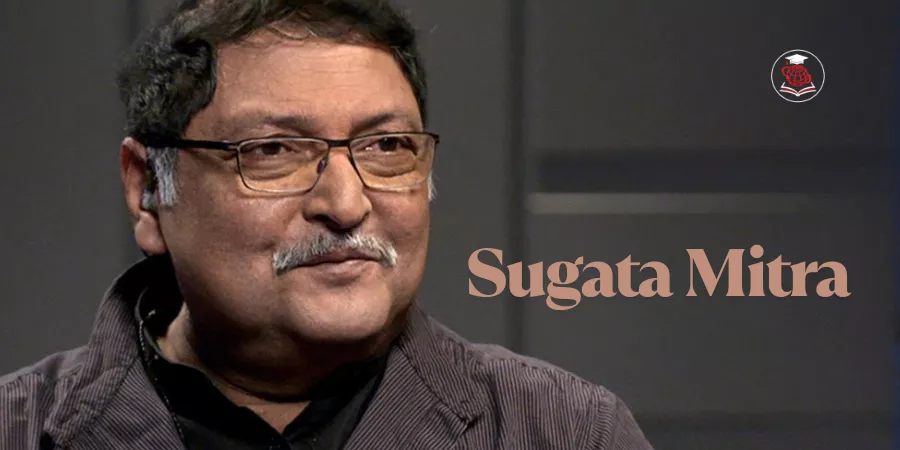
Sugata Mitra fundamentally challenged assumptions about how children learn through a deceptively simple experiment in 1999. He installed a computer in a hole in a wall in a New Delhi slum, providing no instructions, and observed what happened. Children who had never seen computers before taught themselves to use them, to browse the internet, and to learn complex content through collaborative discovery. This Hole in the Wall experiment launched research demonstrating that children can organize their own learning given access to resources and peer collaboration, even without formal teaching or adult intervention.
| Paradigm Shift:
Mitra’s experiments demonstrated that children in groups can learn almost anything by themselves when motivated by curiosity and enabled by internet access, challenging the necessity of traditional teacher-directed instruction for many learning goals. |
The Hole in the Wall Experiment That Changed Everything
In 1999, Mitra, then working as a computer scientist in New Delhi, wondered whether children without access to formal education could learn to use computers on their own. He installed a computer with internet access in a wall separating his office from a slum area, with the screen visible from the street. He provided no instructions, left the computer accessible 24 hours daily, and observed through cameras what would happen.
Within hours, children discovered the computer and began experimenting. Within days, they had taught themselves to navigate the interface, access the internet, and search for information. Within months, they had developed sophisticated usage patterns including downloading and playing games, creating documents, and teaching younger children what they had learned. The speed and depth of self-organized learning stunned Mitra and challenged fundamental assumptions about the necessity of formal instruction for computer literacy.
- 1999: First Hole in the Wall installation in Kalkaji, New Delhi
- Children aged 6-13 taught themselves computer basics within days
- No adult instruction provided, learning entirely peer-to-peer
- Experiment replicated in rural villages with similar results
- Findings published in international journals, attracting global attention
What Children Taught Themselves Without Teachers
Subsequent Hole in the Wall installations across India produced consistent findings. Children in rural villages with no prior computer exposure taught themselves not just basic computer operation but complex skills including browsing, emailing, playing advanced games, and even rudimentary programming. The collaborative nature of learning emerged as a key factor, with children working in groups, teaching each other, and solving problems collectively rather than individually.
Mitra extended the experiments to test whether children could learn academic content through self-organization. He placed computers with access to educational materials in locations without schools or teachers, posing big questions to motivate exploration. Children taught themselves biology concepts, physics principles, and even biotechnology fundamentals by searching, reading, watching videos, and discussing findings with peers. The quality of learning, measured through standardized tests, often exceeded that of children receiving traditional instruction.
| Remarkable Finding:
Children in rural Kalikuppam, Tamil Nadu, taught themselves molecular biology and genetics concepts by searching the internet and collaborating, achieving test scores comparable to students who had formal biology instruction. |
The Role of Curiosity and Collaboration
Two factors emerged as essential for self-organized learning success. Curiosity provided motivation, with children driven to explore when presented with intriguing questions or access to novel resources. Collaboration enabled knowledge construction, with groups solving problems that individuals could not, teaching each other, and developing shared understanding through discussion and experimentation. These findings suggested that schools might achieve better outcomes by cultivating curiosity and facilitating collaboration rather than primarily transmitting information through lectures.
From Computer Science to Educational Philosophy
Sugata Mitra began his career as a computer scientist and physicist, earning his PhD in solid-state physics and working in technology companies before joining educational research. His background outside traditional education circles allowed him to approach learning with fresh perspectives unencumbered by educational orthodoxies. He questioned assumptions that educators took for granted, asking whether teaching was actually necessary for learning or whether it merely represented one possible approach among alternatives.
His work attracted international attention, leading to a TED Prize in 2013 for his vision of building School in the Cloud, a learning lab in India where children engage in self-organized learning experiments. His TED Talks have been viewed tens of millions of times, spreading his ideas globally and inspiring educators to rethink pedagogical approaches. Unlike many education reformers proposing incremental changes, Mitra’s work suggested that fundamental assumptions about teaching and schooling might be unnecessary or even counterproductive for certain learning goals.
- 1982: PhD in Physics, researching educational technology
- 1999: Launched Hole in the Wall experiment
- 2013: Awarded TED Prize for School in the Cloud vision
- Multiple books published including ‘Beyond the Hole in the Wall’
- Visiting professor and researcher at multiple universities globally
Self-Organized Learning Environments: The SOLE Method
Mitra formalized his findings into Self-Organized Learning Environments (SOLE), a pedagogical approach where children work in small groups with internet access to investigate big questions. The teacher’s role transforms from information transmitter to question poser and learning facilitator. Children receive broad questions requiring synthesis across multiple sources, encouraging deep investigation rather than searching for single correct answers.
SOLE sessions follow a predictable structure including posing an intriguing question, forming small groups of 4 to 5 students, providing internet access and collaboration time, allowing student-directed investigation without adult intervention, and concluding with groups presenting findings to the class. The teacher refrains from directing research or correcting misconceptions during investigation, trusting the self-correction that emerges through peer discussion and multiple source consultation. Teachers report that students demonstrate deeper understanding and retention compared to traditional lecture-based instruction.
Educators seeking to understand Self-Organized Learning Environments in practice find that SOLE requires rethinking classroom authority structures, as teachers must become comfortable with uncertainty and student-directed inquiry rather than maintaining comprehensive control over learning processes.
- Big questions posed to motivate genuine investigation
- Small collaborative groups with internet access
- Minimally invasive teacher facilitation, not direction
- Student-led research, discussion, and presentation
- Peer teaching and self-correction through collaboration
The Granny Cloud: Remote Mentorship Revolution
Recognizing that some encouragement and mentorship benefit self-organized learning, Mitra developed the Granny Cloud, a network of retired teachers and professionals who interact with student groups via video conferencing. These remote mentors do not teach content but provide encouragement, admiration, and emotional support that motivates students to persist in challenging investigations. The term Granny reflects research showing that grandmotherly encouragement produces optimal motivational effects.
Granny Cloud participants receive training in non-invasive mentorship, learning to ask questions rather than provide answers, to express genuine interest in student investigations, and to build confidence through admiration rather than evaluation. This model demonstrates that effective educational support does not require subject-matter expertise or formal teaching credentials but rather genuine interest, emotional encouragement, and faith in children’s learning capacity. The approach has been replicated globally, with volunteers providing remote mentorship to student groups investigating questions far beyond the mentors’ own knowledge domains.
| Granny Effect:
Remote mentors who express admiration and encouragement, even without subject expertise, significantly improve student persistence and achievement in self-organized learning investigations compared to groups working entirely without adult interaction. |
Frequently Asked Questions
What is the Hole in the Wall experiment?
The Hole in the Wall experiment involved placing computers with internet access in public spaces in Indian slums and villages without providing instructions or teachers. Children taught themselves to use the computers and learn complex content through peer collaboration and experimentation. The experiments demonstrated that children can organize their own learning given access to resources, challenging assumptions about the necessity of formal instruction for computer literacy and knowledge acquisition.
Does self-organized learning mean children need no teachers?
Mitra argues that traditional teacher-directed instruction is unnecessary for many learning goals, particularly when children have internet access and peer collaboration. However, he acknowledges roles for adults as question-posers, learning facilitators, and emotional supporters through models like the Granny Cloud. The question is not whether adults are unnecessary but whether their primary function should be information transmission or learning environment cultivation and motivational support.
Can SOLE work for all subjects and age groups?
Mitra’s experiments have demonstrated self-organized learning effectiveness across diverse subjects including computer literacy, sciences, mathematics, languages, and even philosophy. Age ranges from primary school through secondary education show positive results. However, critics note that certain skills like systematic mathematics practice or writing mechanics may require more structured instruction. SOLE advocates argue it works best alongside traditional methods rather than replacing them entirely, with teachers strategically choosing when self-organized investigation serves learning goals effectively.
What evidence supports self-organized learning effectiveness?
Mitra’s research, published in peer-reviewed journals, documents children teaching themselves complex content and achieving test scores comparable to traditionally instructed students. Independent replications across multiple countries have confirmed core findings. However, critics note methodological limitations including small sample sizes and lack of long-term outcome tracking. Supporters argue that even if self-organized learning proves equal rather than superior to traditional instruction, its dramatically lower resource requirements make it valuable for contexts lacking qualified teachers.
How do schools implement SOLE practically?
Schools implement SOLE by dedicating regular time, typically weekly sessions, for student groups to investigate big questions using internet resources. Teachers receive training in posing appropriate questions, forming effective groups, and providing minimal facilitation without directing inquiry. Some schools create dedicated SOLE spaces with collaborative furniture and technology, while others integrate SOLE sessions into existing classrooms. Implementation challenges include teacher discomfort with reduced control, ensuring productive rather than distracted student behavior, and balancing SOLE with curriculum requirements.
Reimagining What Schools Could Become
Sugata Mitra’s work challenges fundamental assumptions about institutional education. If children can teach themselves complex content through peer collaboration and internet access, what is the purpose of schools? Mitra suggests that schools should evolve from knowledge transmission centers to learning environment curators, providing access to resources, posing intriguing questions, facilitating collaboration, and offering encouragement rather than primarily delivering lectures and administering tests.
This vision proves particularly relevant for contexts lacking qualified teachers or educational resources. Rather than accepting that millions of children receive no education because teachers are unavailable, self-organized learning offers pathways to educational access using technology and peer collaboration. Even in well-resourced contexts, SOLE challenges educators to reconsider whether traditional instruction represents optimal pedagogy or merely familiar practice. Mitra’s experiments demonstrate that learning often emerges spontaneously when conditions support curiosity and collaboration, suggesting that schools might achieve more by removing obstacles to natural learning processes than by imposing structured instruction that may suppress the self-organization that children instinctively employ when permitted and encouraged.