
Table of Contents
- The Most-Watched TED Talk in History
- Why Schools Kill Creativity: The Core Argument
- From Theatre Professor to Global Education Thought Leader
- Key Books and Their Impact on Education Reform
- The Element: Finding Your Passion and Natural Talents
- Frequently Asked Questions
- Enduring Influence on Education Systems
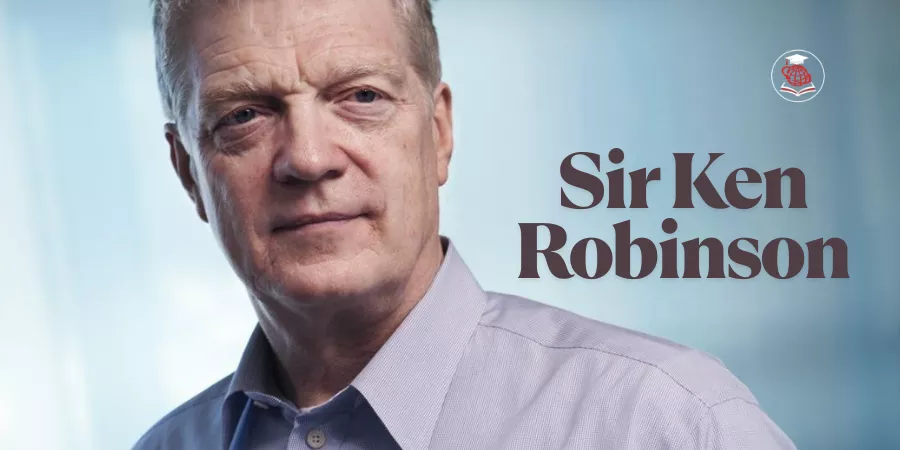
Sir Ken Robinson transformed global conversations about education through a rare combination of wit, storytelling, and profound critique of standardized schooling systems. His 2006 TED Talk remains the most viewed in the platform’s history with over 75 million views, demonstrating extraordinary reach for educational philosophy content. Robinson’s central argument that schools systematically suppress creativity rather than nurturing it resonated across cultural boundaries, inspiring education reform movements, alternative schooling approaches, and policy discussions about how 21st-century learning should differ fundamentally from industrial-age education models.
| Cultural Impact:
Robinson’s ideas influenced education policy discussions in over 60 countries, inspired thousands of alternative schools emphasizing creativity and personalized learning, and fundamentally reframed how educators, parents, and policymakers discuss the purpose of education. |
The Most-Watched TED Talk in History
Robinson’s 2006 TED Talk, Do Schools Kill Creativity, achieved unprecedented reach for educational content through memorable storytelling, humor, and accessible delivery of complex educational critique. The talk opened with an anecdote about a young girl drawing God in class, using humor to illustrate how children’s creative confidence diminishes as they progress through traditional schooling. This narrative approach made abstract educational philosophy tangible and emotionally resonant for audiences without educational expertise.
The talk’s viral success reflected growing public anxiety about whether traditional education prepares children for rapidly changing economies where creativity, adaptability, and innovation matter more than rote knowledge. Robinson articulated frustrations many parents and educators felt but struggled to express coherently. His critique that education systems prioritize conformity over creativity and academic ability over diverse intelligences provided language for widespread dissatisfaction with standardized testing regimes, rigid curricula, and schools organized around industrial efficiency rather than human development.
- 75+ million views across TED platforms and YouTube
- Translated into 60+ languages, global reach unprecedented for education content
- Inspired follow-up talks including ‘Bring on the Learning Revolution’ (2010)
- Catalyzed international discussions about creativity in curriculum
- Referenced in thousands of education policy papers and reform proposals
Why Schools Kill Creativity: The Core Argument
Robinson’s central thesis argued that conventional education systems were designed for industrial economies requiring standardized workers rather than creative economies valuing innovation. He contended that schools organize curricula hierarchically, privileging mathematics and languages while marginalizing arts, music, drama, and dance. This hierarchy, Robinson argued, reflects economic utility in 19th-century industrial contexts but actively harms children whose talents lie outside narrow academic domains.
The argument extended beyond curriculum to pedagogical approaches emphasizing right answers over creative exploration. Standardized testing reinforces conformity by penalizing original thinking that deviates from expected responses. Tracking systems separate students by supposed ability rather than recognizing that intelligence manifests diversely across kinesthetic, artistic, interpersonal, and other domains that academic testing does not measure. Robinson cited research showing that young children demonstrate high creative thinking that declines dramatically as they progress through schooling, suggesting that education actively suppresses rather than develops creative capacity.
| Research Foundation:
Studies Robinson referenced showed that 98% of kindergarteners scored at genius level on divergent thinking tests, but only 10% maintained that level by age 15 after years of conventional schooling, suggesting education systematically reduces creative capacity. |
The Economic Argument for Creativity
Robinson strengthened his case by arguing that creativity matters not just for individual fulfillment but for economic competitiveness in knowledge economies. Automation and artificial intelligence increasingly handle routine cognitive tasks that traditional education emphasizes, while creative problem-solving, innovation, and interpersonal skills remain distinctly human. Economies that cultivate creativity through education gain competitive advantages over those producing graduates skilled only in tasks that technology performs more efficiently.
From Theatre Professor to Global Education Thought Leader
Kenneth Robinson was born in Liverpool in 1950, experiencing childhood polio that cultivated his appreciation for arts and movement. His academic career focused on arts education, earning his PhD from the University of London and teaching drama and theatre at universities before transitioning to educational consulting and advocacy. This theatrical background profoundly influenced his communication style, using performance techniques, timing, and storytelling that made educational philosophy accessible and entertaining.
His 1998 report for the UK government, All Our Futures: Creativity, Culture and Education, established his credentials as a serious policy thinker beyond popular communication. The report argued that creativity should be embedded across curricula rather than confined to arts subjects, that all children possess creative capacities requiring development, and that education systems must adapt to economies where creativity drives value creation. This policy work demonstrated that Robinson’s ideas extended beyond critique toward practical reform proposals.
- 1950: Born in Liverpool, England
- 1981: Earned PhD from University of London
- 1989: Professor and Director of Arts in Schools Project
- 1998: Authored influential UK government report on creativity
- 2003: Knighted for services to education
- 2006: TED Talk launches global recognition
- 2020: Passed away, leaving lasting educational legacy
Key Books and Their Impact on Education Reform
Robinson authored several influential books expanding ideas from his talks into comprehensive educational philosophy. The Element: How Finding Your Passion Changes Everything (2009) argued that people thrive when they discover their natural talents and passions, what Robinson called finding your element. The book profiled diverse successful individuals from various fields, demonstrating that conventional academic success is neither necessary nor sufficient for meaningful achievement and fulfillment.
Creative Schools: The Grassroots Revolution That’s Transforming Education (2015) moved from critique to constructive proposals, profiling innovative schools worldwide that prioritize creativity, personalized learning, and diverse forms of intelligence. Robinson acknowledged that systemic education reform faces political and institutional obstacles but argued that grassroots innovation by individual schools and teachers demonstrates feasible alternatives to standardized models. The book provided practical examples that educators could adapt rather than abstract theory requiring wholesale system redesign.
- Out of Our Minds: Learning to be Creative (2001)
- The Element: How Finding Your Passion Changes Everything (2009)
- Finding Your Element: How to Discover Your Talents and Passions (2013)
- Creative Schools: The Grassroots Revolution (2015)
- You, Your Child, and School: Navigate Your Way to the Best Education (2018)
The Element: Finding Your Passion and Natural Talents
The concept of the element, where natural aptitude meets personal passion, became Robinson’s framework for reimagining education purpose. He argued that education should help students discover their elements rather than forcing all children through identical curricula assuming uniform talents and interests. This required exposing students to diverse experiences in arts, sciences, sports, trades, and other domains, allowing each child to identify where they find both competence and joy.
Robinson distinguished between being in your element and merely being good at something. The element requires both natural ability and passion, creating the conditions where people achieve excellence and fulfillment. Traditional education often pushes students toward fields where they have ability but no passion, or passion but inadequate support for developing ability. Optimal education would help students identify their elements and provide resources to develop expertise in those areas, acknowledging that elements vary tremendously across individuals.
Educators implementing Sir Ken Robinson’s ideas for transforming modern education often begin by expanding curriculum diversity, creating opportunities for students to explore varied domains that standardized testing regimes marginalize or eliminate entirely from schools.
| Element Examples:
Robinson profiled Paul McCartney discovering music, Gillian Lynne finding dance, Matt Groening developing animation, demonstrating that extraordinary achievement emerges when natural talent meets passionate engagement in the right environmental conditions. |
Frequently Asked Questions
What was Sir Ken Robinson’s main message about education?
Sir Ken Robinson’s central message was that conventional education systems suppress creativity rather than nurturing it, organizing schools around industrial-age priorities that no longer serve economic or human development needs. He argued that education should recognize diverse forms of intelligence, personalize learning to individual talents and passions, and cultivate creativity as essential for both personal fulfillment and economic competitiveness in knowledge economies.
Why is the ‘Do Schools Kill Creativity’ TED Talk so popular?
The talk resonated globally because it articulated widespread frustrations with education systems using humor, storytelling, and accessible language rather than academic jargon. Robinson’s critique validated parents’ and educators’ concerns about standardized testing, rigid curricula, and schools that seem to diminish rather than develop children’s natural creativity and curiosity. The talk’s viral spread reflected growing international anxiety about whether traditional schooling prepares children for rapidly changing futures.
Did Sir Ken Robinson’s ideas change actual schools?
Yes, Robinson’s ideas influenced thousands of schools adopting project-based learning, arts integration, personalized education plans, and other approaches prioritizing creativity and diverse intelligences. While wholesale education system transformation remains elusive due to political and institutional inertia, his work inspired grassroots innovation demonstrating feasible alternatives to standardized models. Many progressive schools explicitly cite Robinson’s philosophy when explaining their educational approaches to parents and communities.
What is ‘the element’ according to Ken Robinson?
The element is the intersection of natural aptitude and personal passion where people find both competence and joy. Robinson argued that discovering your element is essential for fulfillment and excellence, and that education should help students identify their elements rather than forcing everyone through identical curricula. The element varies tremendously across individuals, some finding it in sciences, others in arts, sports, entrepreneurship, or countless other domains.
How did Sir Ken Robinson influence education policy?
Robinson’s 1998 UK government report influenced creativity in education policy, and his subsequent work shaped international discussions about curriculum reform, standardized testing, and personalized learning. While direct policy attribution is difficult, his ideas appear in education reform proposals globally, from Finland’s curriculum redesign emphasizing creativity to increasing skepticism about high-stakes testing in the United States and other countries. His work legitimized creativity as a serious educational priority rather than optional enrichment.
Enduring Influence on Education Systems
Sir Ken Robinson passed away in 2020, but his influence on global education conversations continues through the schools he inspired, the educators who adapted his ideas, and the parents who demand education serving their children’s diverse talents rather than industrial efficiency. His critique of standardized education achieved rare cultural penetration for educational philosophy, making creativity a mainstream concern rather than niche interest of arts advocates.
The transformation Robinson advocated remains incomplete, with political forces, institutional inertia, and competing priorities slowing systemic change. However, the grassroots innovation he celebrated demonstrates that individual schools and teachers can implement creative education practices without waiting for top-down reform. Robinson’s lasting contribution lies less in policy victories than in changing how millions of people understand education’s purpose, shifting conversation from credentialing and sorting toward human development and creative potential that transcends narrow academic measurement.