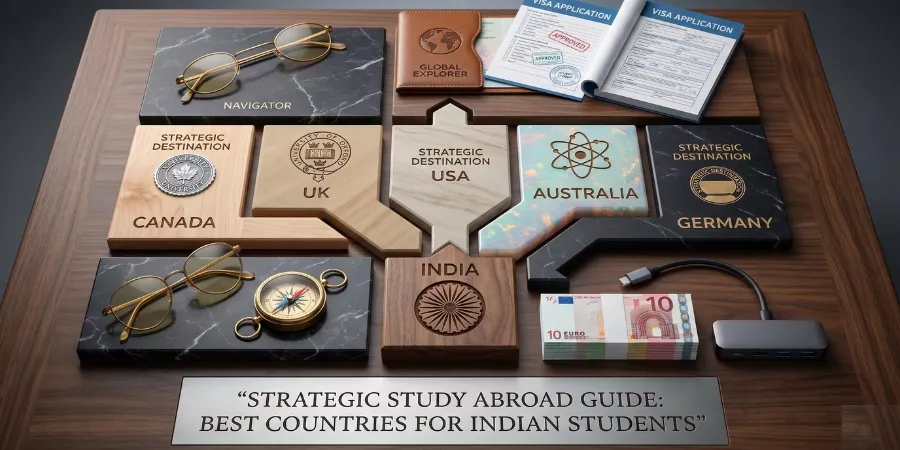


Over 1.5 million international students apply to universities worldwide each year, yet research shows that approximately 40% miss their preferred intake simply due to deadline confusion or inadequate preparation time. Understanding application timelines across different countries represents the difference between starting your dream program on schedule and waiting another six to twelve months while watching peers move forward.
Application deadlines vary dramatically by country, institution, and program, with some universities requiring submissions up to eighteen months before classes begin. The complexity multiplies when considering that each destination operates on different academic calendars, uses distinct application platforms, and maintains separate requirements for international versus domestic applicants. This guide deconstructs the application timelines for major study destinations, providing the strategic framework international students need to plan effectively.
Understanding the Global Academic Calendar Landscape
Universities worldwide operate on fundamentally different academic schedules that shape their entire application architecture. The United States and Canada follow a fall-primary system with classes beginning in August or September, while Australia’s academic year starts in February, and Germany operates on October and April semester starts. These variations create both opportunities and constraints for international applicants.
The concept of “intakes” or “entry terms” determines when students can begin their studies. Most universities offer multiple intakes throughout the year, with primary intakes offering the widest program selection and secondary intakes providing fewer but still substantial options. Understanding which intake aligns with your preparation timeline, previous academic schedule, and visa processing requirements becomes the foundation of successful application planning.
United States Application Timeline Framework
The US operates primarily through Fall intake beginning in late August or September, with Early Action and Early Decision deadlines typically falling November 1-15, and Regular Decision deadlines between January and March. This system requires students to begin preparation twelve to eighteen months before their intended start date.
For Fall 2026 admission, the realistic timeline begins in September 2024 with university research and standardized test preparation. Students aiming for Fall 2025 intake should start applications in September-October 2024, with most universities having deadlines in January 2025 and admission decisions announced by March-April 2025. Graduate programs at institutions like MIT, Stanford, and UC Berkeley typically close between December and March for fall admission.
Spring intake, starting in January, serves as the secondary option with application deadlines usually between November and January of the preceding year. Summer intake exists but remains limited to specific programs and institutions. The competitive nature of US admissions means that early applications receive priority consideration, and scholarship opportunities concentrate heavily in the fall intake cycle.
United Kingdom’s Centralized UCAS System
The UK operates through UCAS (Universities and Colleges Admissions Service) with applications for 2026 entry required by 18:00 UK time on January 29, 2026 for most courses. This centralized system allows students to apply to up to five programs simultaneously through a single application portal.
However, highly competitive programs including medicine, dentistry, veterinary science, and applications to Oxford or Cambridge require earlier submission by October 15. The earlier deadline exists because these programs use additional selection processes including interviews, admissions tests, and portfolio reviews requiring extended evaluation periods.
UK universities strongly encourage earlier submission than the official deadline. Schools and colleges typically set their internal deadlines in November or December to allow time for reference writing and application review before UCAS submission. International students benefit from applying early as many universities continue accepting applications after the January deadline, but popular programs fill quickly.
Canada’s Three-Intake System
Canada offers three intakes for international students: Fall (September), Winter (January), and Summer (May), with Fall intake being the primary entry point offering the widest range of programs and scholarship options. Over one million international students studied in Canada in 2023, and with stricter regulations implemented, applying within the correct intake has become increasingly critical.
For Fall 2026 intake, applications typically open from August 2025 to March 2026, with most universities having deadlines between December 2025 and February 2026. Winter intake applications run from February to September for the following January start, while Summer intake accepts applications from October to February.
Specific universities like Carleton set international student deadlines at April 1 for fall admission, while domestic applicants from Canada or the US receive extended deadlines until June 1. Canadian universities generally operate on a first-come, first-served basis within their application windows, making early submission strategically advantageous for securing seats and maximizing scholarship consideration.
Australia’s Flexible Intake Structure
Australia operates primarily through February and July intakes, with a limited November intake for specific programs, and February representing the main academic start offering the most courses and scholarship options. The February intake aligns with Australia’s academic year and provides the fullest university experience including orientation programs, club activities, and internship cycles.
For February 2026 intake, application deadlines at top universities vary significantly: Monash University closes October 31, 2025, while University of Sydney accepts applications until December 1, 2025, and ANU until December 15, 2025. July intake applications typically open in early 2026 for mid-year starts, providing flexibility for students awaiting final results or needing additional preparation time.
A critical consideration involves Ministerial Direction 115, implemented November 14, 2025, which prioritizes visa processing based on whether universities have reached their government allocation cap. This means students must not only meet university deadlines but also lodge visa applications strategically to avoid processing delays extending up to five months.
Germany’s Semester-Based System
Germany operates on two intakes: Winter Semester beginning in September-October and Summer Semester starting in March-April, with Winter Semester being the primary intake offering maximum program options. Over 70% of public universities charge minimal or no tuition fees for international students, making deadline awareness particularly valuable.
For Winter Semester 2025, application deadlines typically fall between May and July 2025 through uni-assist, the centralized application service, with July 15 being the standard deadline for most programs. Some competitive programs close earlier, while others without enrollment restrictions accept applications until September 15.
Summer Semester 2026 applications generally run from November 2025 to January 2026, with mid-January marking the typical deadline. German universities close application portals precisely at midnight on stated deadlines, and extensions rarely occur. The centralized uni-assist system processes applications for over 170 German universities, while some institutions maintain direct application processes with varying timelines.
Strategic Timeline Planning Across Destinations
Successfully navigating global university timelines requires reverse-engineering from your target start date. For students finishing secondary school in May-June, targeting September intakes in the US, UK, or Canada requires application submission the previous fall, meaning preparation must begin at least twelve months before applications open.
Students completing degrees with results released mid-year face strategic choices between waiting for next year’s primary intake with complete credentials or pursuing mid-year intakes with conditional offers. For example, Indian students graduating June-July 2026 should target July 2026 or November 2026 intakes in Australia, as their final transcripts arrive perfectly timed for these entry points.
Standardized testing represents another timeline consideration. English proficiency tests (IELTS, TOEFL, PTE) require advance scheduling and potential retakes, while graduate admissions tests (GRE, GMAT) demand months of preparation. Scoring deadlines often precede application deadlines by several weeks, compressing preparation windows further.
Common Timeline Mistakes and How to Avoid Them
The most frequent error involves conflating university application deadlines with visa deadlines. Securing admission represents only the first step; visa processing adds another four to twelve weeks depending on destination. Students who apply at the deadline often find themselves scrambling to complete visa requirements before term starts, sometimes necessitating deferral to the next intake.
Another critical mistake involves failing to account for document preparation time. International credential evaluation, transcript translation, and securing recommendation letters can require several weeks or months, and even small delays like missing signatures or late translations can cause students to miss entire semesters. Setting internal deadlines one month before official deadlines creates necessary buffer time.
Many students also underestimate scholarship deadline variations. Financial aid applications frequently close weeks or months before admissions deadlines, and the most generous awards target the earliest applicants. Students who wait until application deadlines often find scholarship funds depleted regardless of their qualifications.
Application timelines for global universities demand strategic planning that begins far earlier than most students anticipate. The complexity of coordinating multiple destination timelines, standardized testing schedules, document preparation, and visa processing creates numerous opportunities for missed deadlines and delayed starts. However, students who invest time understanding these timelines, create detailed planning calendars with built-in buffers, and begin preparation twelve to eighteen months before their target start date position themselves for successful admissions with maximum scholarship consideration and stress-free transitions to their chosen programs.