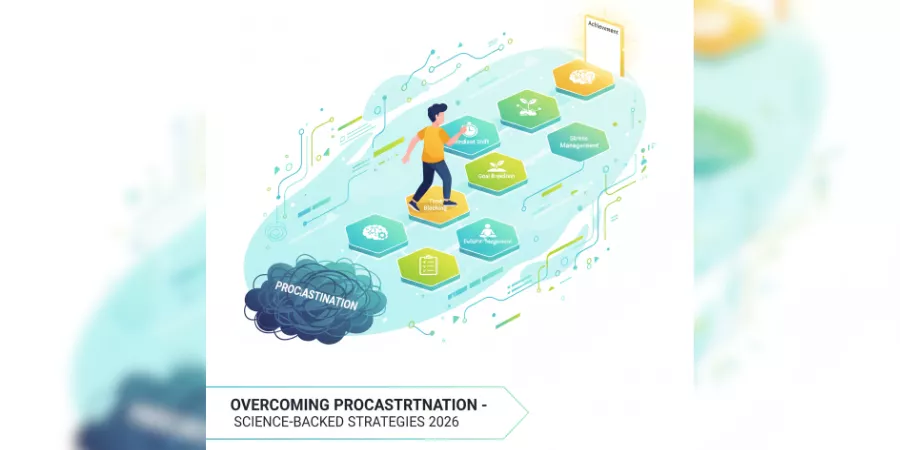
Research from the American Psychological Association analyzing student behavior patterns reveals startling statistics about procrastination prevalence between 80 and 90 percent of college students procrastinate, particularly with academic coursework. Among working adults, 20 to 25 percent qualify as chronic procrastinators, meaning delay has become ingrained personality trait affecting every life domain. Professor Fuschia Sirois from Durham University, who studied procrastination for over twenty years, found that chronic procrastinators delay tasks “to the point where it’s like part of their personality,” with consequences extending far beyond missed deadlines to include stress, anxiety, depression, and even physical health problems.
The persistent misconception that procrastination stems from laziness prevents most people from addressing the actual problem. Psychology research consistently demonstrates that procrastination is not about poor time management or insufficient motivation but rather traces to complex psychological dynamics including fear of failure, perfectionism, emotion regulation difficulties, and low self-efficacy. Understanding these root causes provides the foundation for effective solutions you cannot fix problems you don’t properly understand.
Why Procrastination Is Self-Protection, Not Laziness
Princeton University’s McGraw Center for Teaching and Learning explains that procrastination often functions as self-protection strategy rather than character flaw. When students or professionals procrastinate, they maintain the excuse of “not having enough time” in event of failure, protecting their sense of ability from being threatened. This psychological mechanism becomes particularly powerful in evaluative environments where much rides on performance if you never truly try, you never truly fail.
The fear dynamics underlying procrastination take multiple forms. Fear of failure causes anxiety about performing poorly, leading to task avoidance that temporarily relieves stress but amplifies it when deadlines loom. Fear of success creates paradoxical worry that achievement will raise expectations or change relationships. Perfectionism manifests as endless preparation, repeated revisions, or paralysis waiting for “perfect conditions” that never materialize. Research published in multiple psychology journals demonstrates positive correlations between procrastination and fear of failure, with some studies showing moderate to strong relationships depending on individual emotion regulation capabilities.
Johns Hopkins University research identifying procrastination correlates emphasizes that the behavior is rooted in fear and anxiety rather than time management deficits. When pressure to perform well feels overwhelming, avoidance becomes psychologically attractive despite rational knowledge that delay makes situations worse. This creates self-destructive cycles temporary anxiety relief from avoidance sets up stronger negative emotions when tasks must finally be confronted, plus self-blame afterward for falling below personal standards.
Fatal Mistakes That Perpetuate Procrastination
Claiming you “work best under pressure” represents rationalization masking the actual problem. Virtually everyone who habitually claims this has never completed important tasks using systematic planning with adequate review time, making genuine comparison impossible. The “rush” of meeting last-minute deadlines feels exciting before or after cramming when negative consequences like anxiety, stress, fatigue, and substandard work are temporarily forgotten. More critically, leaving everything to the end dramatically increases chances of catastrophic failure when illness, technology problems, or unexpected obstacles arise with no buffer time remaining.
Setting unrealistic goals that guarantee failure creates demotivation that fuels further procrastination. Deciding to read one hundred pages daily when you realistically manage fifty means inevitable disappointment and the thought “I can’t do this so why bother,” triggering complete avoidance. Strategic goal-setting requires honest assessment of actual capacity rather than aspirational fantasy, with Johns Hopkins recommending you change internal dialogue from “I can’t do this but I have to” toward “I can do this and I choose to.”
Failing to identify and acknowledge procrastination patterns prevents any possibility of change. Many people spend entire days on low-priority tasks, social media, or “productive procrastination” like excessive research without recognizing they’re avoiding important work. Morning goal identification writing specific daily objectives before starting work creates accountability that vague “I’ll work on my project today” lacks. When tasks are explicitly listed, completion becomes measurable rather than subject to self-deception about productivity.
Operating in environments designed for distraction makes procrastination effortless. Attempting focused work in bed, near snacks, with phone notifications enabled, or in high-traffic areas provides constant temptation and interruption. Productivity requires intentionally designed environments aligned with work demands quiet spaces for concentration, devices silenced or removed, and physical positioning signaling readiness for serious effort rather than relaxation.
Procrastination Mistakes and Solutions
- Mistake: Claiming “I’m just lazy” instead of examining fear of failure
- Solution: Identify specific anxieties about task – what exactly worries you?
- Mistake: Waiting for perfect conditions or inspiration before starting
- Solution: Use 2-minute rule – if takes under 2 minutes, do immediately; for larger tasks, commit to just starting for 5 minutes
- Mistake: Focusing only on final deadline without intermediate checkpoints
- Solution: Break tasks into specific sub-tasks with individual mini-deadlines
- Mistake: Working in isolation without accountability
- Solution: Create study groups, accountability partners, or daily check-ins with someone tracking progress
- Mistake: Perfectionism preventing completion and submission
- Solution: Embrace “progress over perfection” – done is better than perfect
Science-Backed Techniques That Actually Work
The Pomodoro Technique provides structured focus intervals proven effective for procrastination-prone individuals. Set timer for twenty-five minutes of completely focused work on single task, followed by five-minute break. Repeat cycle four times, then take longer fifteen to thirty minute break. This approach makes daunting tasks manageable by limiting commitment to short sustainable bursts rather than indefinite work sessions that feel overwhelming before starting. College students using Pomodoro consistently report improved productivity and reduced anxiety about large projects.
Task decomposition transforms intimidating assignments into approachable steps. Research paper becomes: select topic, find five sources, read and take notes, create outline, write introduction, write body paragraphs, write conclusion, edit and proofread. Each component requires perhaps thirty to ninety minutes rather than the psychologically paralyzing “write entire research paper.” Breaking down homework this way makes assignments seem less daunting while providing clear starting points eliminating the “I don’t know where to begin” paralysis.
The two-minute rule addresses accumulation of small tasks that compound into overwhelming backlogs. If something takes two minutes or less hanging coat, responding to quick email, scheduling appointment do it immediately rather than adding to mental to-do list. These quick wins prevent pile-ups while building momentum through visible accomplishment. Extended principle applies to larger tasks: commit to working just two minutes, which typically leads to continued engagement once initial resistance is overcome.
Accountability systems leverage social pressure and responsibility toward others. Study groups create obligation to complete assigned sections before meetings, reducing likelihood of procrastination when letting down peers means embarrassment. Daily check-ins with accountability partners sharing morning goals and evening completion status provides external motivation when self-discipline wavers. Some students find success with public commitment through social media or study communities where progress updates create reputation stakes.
Environment design eliminates friction and removes temptation. Designated study locations become psychologically associated with focused work rather than relaxation. Silencing phone notifications, using website blockers during work hours, and keeping distracting items out of sight reduces constant decision-making about whether to engage with distractions. Some students benefit from background white noise or classical music drowning ambient distractions while maintaining focus-conducive atmosphere.
The Daily Practice Framework
Study journals provide visibility into procrastination patterns invisible during active avoidance. Daily entries documenting actual time use, whether schedules succeeded, and what factors prevented work completion reveal personal habits and triggers. Over weeks, patterns emerge certain task types trigger avoidance, specific times of day prove most productive, particular distractions derail focus most frequently. This self-knowledge enables strategic planning addressing individual vulnerabilities rather than generic advice.
Realistic scheduling accommodates human limitations rather than fighting them. Including easy tasks alongside difficult ones maintains motivation through regular completion satisfaction. Scheduling rest and socialization hours prevents burnout while legitimizing breaks, reducing guilt that often accompanies necessary recovery time. When procrastination occurs and it inevitably will incorporating missed tasks into next day’s plan prevents compounding delays.
Overcoming procrastination is less about willpower than understanding psychological mechanisms and implementing systems addressing root causes rather than symptoms.